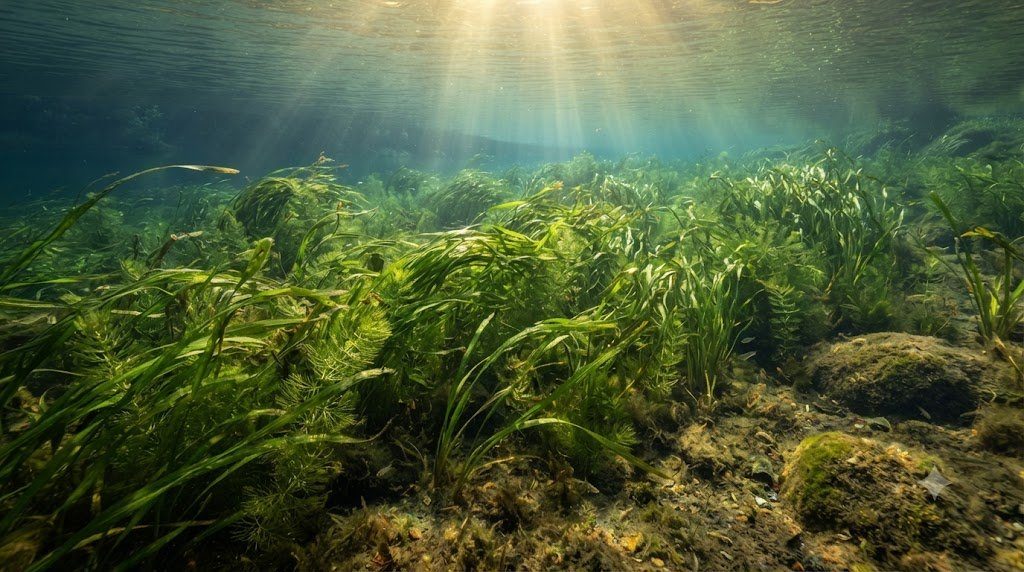
The littoral zone of freshwater lakes and slow-moving rivers is not an empty water column; it is a structural underwater forest engineered by Submerged Aquatic Vegetation (SAV, or true aquatic macrophytes). Unlike microscopic phytoplankton drifting freely in the pelagic sun, submerged macrophytes are complex, multicellular vascular plants (alongside macroscopic charophyte green algae) rooted directly into lakebed sediments.
Submerged macrophytes represent the ecological anchor of shallow lakes: their dense underwater stems attenuate incoming wave energy, stabilize soft littoral sediments, assimilate massive quantities of bioavailable phosphorus and nitrogen, secrete natural allelopathic compounds that suppress algal blooms, and provide essential structural refugia for juvenile fish and zooplankton. In this monograph, we deconstruct macrophyte bathymetric zonation, the Alternative Stable States Hypothesis, and the devastating impacts of aggressive invasive species like Eurasian watermilfoil.
Bathymetric Zonation of Aquatic Macrophytes
As water depth increases from the lake shoreline out toward the open pelagic zone, light attenuation and physical wave shear sort aquatic vegetation into four distinct physiological zones:
- Emergent Macrophyte Zone (Water Depth 0.0 to 1.5 meters): Rooted in saturated hydric soils with stems, leaves, and reproductive structures projecting high into the air. Dominated by Cattails (Typha), Bulrushes (Schoenoplectus), and Common Reed (Phragmites). They absorb atmospheric $CO_2$ and dissipate shoreline storm waves.
- Floating-Leaved Macrophyte Zone (Water Depth 0.5 to 3.0 meters): Rooted in bottom sediments with flexible petioles extending to leaves that float flat on the water surface. Dominated by White Water Lily (Nymphaea) and Spatterdock (Nuphar). Their broad leathery pads shade out underlying algae.
- Submerged Macrophyte Zone (SAV) (Water Depth 1.0 to 6.0+ meters): Plants that complete their entire vegetative life cycle completely submerged beneath the surface. Dominated by Wild Celery (Vallisneria americana), Pondweeds (Potamogeton spp.), Waterweed (Elodea canadensis), and Coontail (Ceratophyllum demersum). Light penetration (specifically the 1% surface irradiance photic boundary) sets the maximum depth limit ($Z_{max}$) of colonization.
- Macroalgae / Charophyte Carpet (Deep Littoral Margins): Advanced multicellular green algae (Stoneworts, Chara and Nitella) that carpet deep sediments up to 10+ meters in ultra-clear oligotrophic lakes, encrusted with calcium carbonate and emitting a characteristic garlicky odor.
| Macrophyte Ecological Group | Representative Taxa | Carbon Acquisition Strategy | Sediment Rooting System | Primary Ecosystem Service |
|---|---|---|---|---|
| Tapegrass / Wild Celery (SAV) | Vallisneria americana | Bicarbonate (HCO3-) & free CO2 uptake | Extensive underground fibrous runner root system | Superb sediment binding; premier diving duck food |
| Broadleaf Pondweeds (SAV) | Potamogeton amplifolius | Dissolved carbon dioxide specialist | Rhizomatous perennial root network | High structural habitat complexity for gamefish |
| Stonewort Macroalgae (SAV) | Chara vulgaris / Nitella | High bicarbonate affinity (Precipitates CaCO3 marl) | Rhizoids only (Absorbs nutrients through thallus) | Marl precipitation clarifies water column dramatically |
| Invasive Canopy-Forming SAV | Myriophyllum spicatum (Eurasian Milfoil) | Aggressive surface canopy formation | Adventitious roots from fragmented stems | Displaces native SAV; forms impenetrable boating mats |
The Alternative Stable States Hypothesis in Shallow Lakes
In 1993, Dutch limnologist Marten Scheffer revolutionized lake management with the Theory of Alternative Stable States. Shallow lakes (< 3 meters mean depth) do not respond smoothly or linearly to nutrient loading. Instead, at intermediate nutrient concentrations, the exact same lake can exist in one of two radically different stable equilibriums:
- The Clear-Water Macrophyte-Dominated State: Dense submerged vegetation blankets the lake bed. The plants anchor sediments, absorb dissolved phosphorus, shelter large Daphnia from fish predation among their stems, and secrete allelopathic chemicals. The water remains sparkling and clear.
- The Turbid Phytoplankton-Dominated State: The lake is devoid of submerged plants, and the water column is choked by dense unicellular algae. Wind waves constantly resuspend bare mud, and planktivorous fish devour all exposed zooplankton.
Once a lake flips from the clear macrophyte state to the turbid algal state, a profound hysteresis loop occurs: simply reducing nutrient inputs to previous levels will NOT bring the plants back! Because muddy water shades out newly germinating seedlings on the lake bed, managers must actively shock the system (via biomanipulation, temporary lake drawdown, or aluminum treatment) to restore clear water and jump-start macrophyte recolonization.
Carbon Concentrating Mechanisms: Bicarbonate (HCO3-) Assimilation
In terrestrial air, carbon dioxide ($CO_2$) is abundant and diffuses rapidly. In freshwater, dissolved free $CO_2$ diffuses 10,000 times slower, and in productive alkaline lakes, daytime photosynthesis rapidly depletes free $CO_2$ to near-zero, driving water pH above 8.5. How do submerged macrophytes continue photosynthesizing when free $CO_2$ is exhausted?
Many advanced SAV species (such as Vallisneria and Elodea) have evolved specialized Carbon Concentrating Mechanisms (CCMs) to utilize dissolved bicarbonate ($HCO_3^-$). Polarized leaf cells actively pump hydrogen ions ($H^+$) out of their lower leaf surfaces, acidifying the boundary layer to convert bicarbonate to $CO_2$, which diffuses into chloroplasts to fuel the RuBisCO enzyme, while excreting hydroxide ($OH^-$) ions from their upper leaf surfaces—frequently precipitating visible white crusts of solid calcium carbonate (marl) on their leaves!
Invasive Macrophyte Ecology: Eurasian Watermilfoil vs. Hydrilla
Anthropogenic disturbance and boat trailers have spread aggressive non-native macrophytes worldwide. Eurasian watermilfoil (Myriophyllum spicatum) and Hydrilla (Hydrilla verticillata) outcompete native plants through canopy dominance: their stems grow rapidly to the water surface and branch profusely, creating a dense, impenetrable 1-meter-thick surface mat that blocks 99% of sunlight from reaching native bottom plants. Furthermore, Hydrilla produces underground tubers and turions that remain dormant in lake mud for up to seven years, surviving complete mechanical harvesting and chemical herbicide applications.
Wave Attenuation Hydrodynamics and Shoreline Resuspension Protection
In shallow lakes and coastal river bays, wind-driven surface waves generate orbital water motions that extend downward to the bed, exerting high shear stresses that resuspend fine organic sediments, creating chronic turbidity. Submerged aquatic vegetation acts as a powerful hydrodynamic wave damper:
As wave oscillations pass through a dense meadow of Vallisneria or Potamogeton, flexible macrophyte stems extract kinetic energy from the fluid via drag friction. Canopy wave damping follows the Dean and Dalrymple wave-decay formulation: a 50-meter-wide belt of submerged vegetation can attenuate over 60% to 80% of incoming wave energy, reducing bottom shear stress below the threshold of sediment resuspension. By dampening turbulence, macrophytes create a calm, self-stabilizing microclimate that encourages suspended sediment to settle out of the water column, reinforcing the clear-water state.
Littoral Refugia Kinetics: The Diel Macrophyte Migration Shield
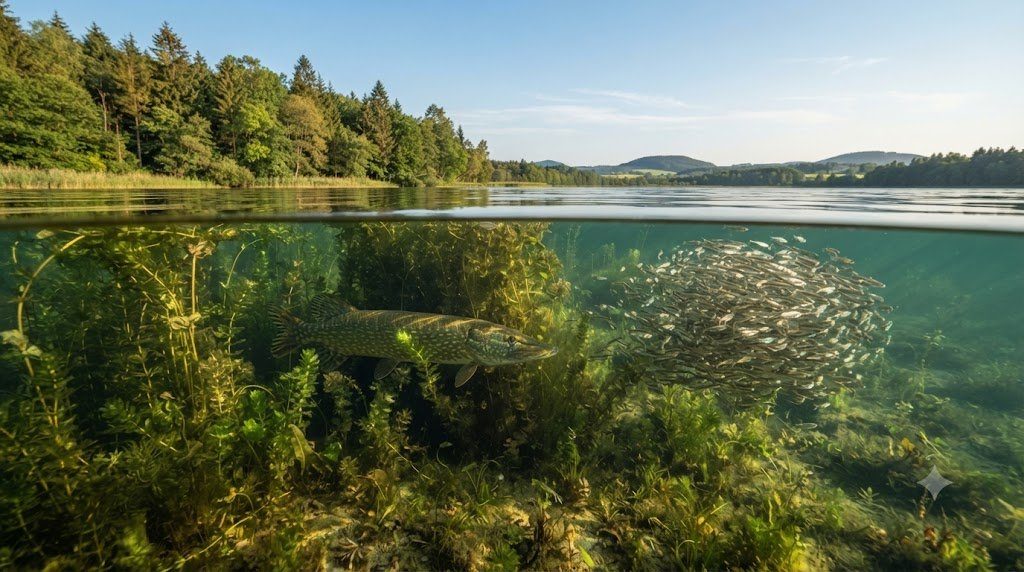
Submerged macrophyte beds provide crucial physical refugia against visual-hunting fish predators. During daylight hours, large-bodied Daphnia migrate horizontally from the open, exposed pelagic zone into the dense, shaded stems of littoral macrophyte beds (Diel Horizontal Migration, DHM), where complex plant foliage blocks visual line-of-sight for predatory bluegills and bass. At night, the zooplankton swim back out into the open pelagic water to graze on phytoplankton, demonstrating how littoral plant beds stabilize whole-lake trophic dynamics.
Allelopathic Biochemical Warfare: Macrophyte Inhibition of Phytoplankton
Submerged aquatic macrophytes maintain competitive dominance over pelagic phytoplankton not only through light shading and nutrient sequestration, but through sophisticated chemical warfare known as allelopathy. Rooted aquatic species—notably Ceratophyllum demersum (coontail), Myriophyllum spicatum, and Chara stoneworts—synthesize and exude potent secondary organic compounds, including tellimagrandin II, sulfurous compounds (such as dithiolane and lenthionine), and diverse polyphenolic tannins directly into the surrounding water column. These allelochemicals disrupt the photosynthetic electron transport chain within cyanobacteria and green algae, specifically inhibiting photosystem II (PSII) activity and suppressing harmful cyanobacterial bloom formation even under elevated nutrient concentrations.
Biogenic Carbonate Calcification in Charophyte Meadows
In hard-water, alkaline lakes, dense underwater meadows of charophytes (stoneworts of the genus Chara) function as colossal biogenic calcite calcification engines. During active daytime photosynthesis, Chara absorbs bicarbonate ($HCO_3^-$) ions from the water, releasing hydroxide ($OH^-$) ions across localized nodal bands on its thallus. This alkaline micro-environment spikes the local pH above 9.5, driving the spontaneous chemical precipitation of calcium carbonate ($CaCO_3$, calcite) encrustations that coat the entire plant body. As calcite crystals precipitate, orthophosphate ions co-precipitate onto the mineral lattice, stripping bioavailable phosphorus from the water column and permanently burying it into marl sediment beds.
Aquatic Ecological Survey Protocols and Laboratory Bioassessment
Operationalizing the principles of Submerged Aquatic Vegetation (SAV) Ecology in environmental impact assessments and conservation biology requires disciplined taxonomic rigor. Ecological communities fluctuate seasonally: benthic insects emerge as winged adults, zooplankton undergo boom-and-bust predator cycles, and submerged aquatic vegetation senesces in autumn.
A professional freshwater bioassessment integrates macroinvertebrate kick-net transects, pelagic zooplankton vertical tows, macrophyte rake surveys, and molecular environmental DNA filtering. Use the standardized bioassessment execution matrix below.
| Biological Assemblage | Sampling Hardware / Method | Field Collection Standard | Laboratory Taxonomic Processing | Ecological Metric & Assessment Index |
|---|---|---|---|---|
| Benthic Macroinvertebrates | 500-micron D-frame kick net | 1.0 m² riffle cobble kick (60 seconds); 3 replicates per reach | Sub-sample 300 organisms in Caton grid tray; identify to genus/species | EPT Richness, Hilsenhoff Biotic Index (HBI), B-IBI multi-metric score |
| Pelagic Zooplankton | 80-micron Wisconsin plankton net | Vertical tow from 1m above bottom to surface @ 0.5 m/s | Enumerate cladocerans, copepods, and rotifers in Sedgewick-Rafter cell | Daphnia biomass density; mean zooplankton body length (Trophic cascade metric) |
| Phytoplankton / Microalgae | Integrated 2-meter PVC euphotic hose sampler | Collect composite water across euphotic zone; preserve w/ Lugol’s iodine | Utermöhl inverted microscope settling chamber count @ 400x magnification | Chlorophyll-a concentration (μg/L); Cyanobacteria relative abundance (% HAB) |
| Submerged Macrophytes (SAV) | Double-sided metal sampling rake on pole/rope | Deploy rake along 100m transect lines at 1m depth increments | Estimate species percent cover; measure dry biomass (g/m²) | Floristic Quality Index (FQI); native vs. invasive macrophyte ratio |
| Environmental DNA (eDNA) | Peristaltic pump + 0.45μm PES capsule filter | Filter 1.0 to 2.0 L surface water; inject Longmire’s lysis buffer | Clean-room extraction; targeted TaqMan qPCR or NGS metabarcoding | Species presence/absence detection; absolute mitochondrial copy concentration |
Microscopic Enumeration Protocols in the Limnological Laboratory
Accurate quantification of microscopic aquatic communities requires specialized counting chambers and magnification optics:
- Sedgewick-Rafter Cell (Zooplankton & Large Algae): A glass slide holding exactly 1.0 milliliter of sample in a 50x20x1 mm chamber ruled into 1,000 grids. Examined at 100x to 200x magnification to calculate organisms per liter: $N = (C \cdot 1000) / (A \cdot D \cdot F)$, where $C$ is count and $F$ is concentration factor.
- Palmer-Maloney Cell (Nannoplankton): A shallow circular ceramic chamber holding 0.1 mL, optimized for high-power 400x phase-contrast identification of small flagellates and diatoms.
- Utermöhl Sedimentation Chambers: Water samples preserved with Lugol’s iodine settle by gravity down a vertical glass cylinder over 24 hours onto a thin glass coverslip, scanned from below using an inverted research microscope.
Frequently Asked Questions Concerning Freshwater Ecosystems & Bioindicators
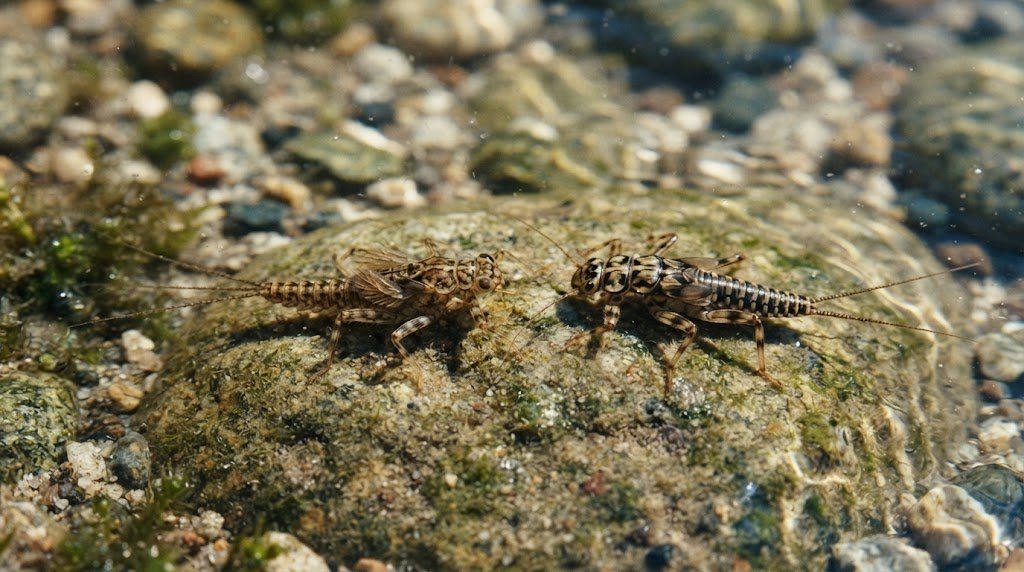
Why are stoneflies (Plecoptera) the first group to disappear when a stream is polluted?
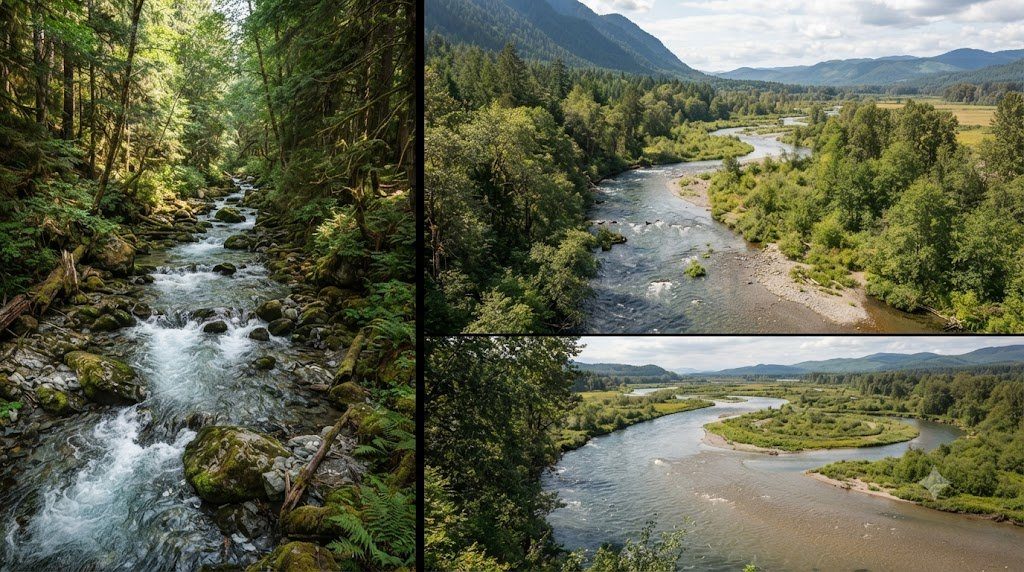
Stoneflies are coldwater stenotherms adapted to roaring mountain streams. Unlike tolerant insects that possess hemoglobin or breathe atmospheric air through siphons, stoneflies rely entirely on delicate external gills and cutaneous gas exchange. Even slight drops in dissolved oxygen or spikes in temperature suffocate them, making them the ultimate canaries in the coal mine for stream degradation.
How does biomanipulation clear a green, murky lake?
Biomanipulation restructures the top-down food chain: managers remove planktivorous minnows (or stock apex predators like northern pike). Relieved of fish predation, populations of large-bodied Daphnia zooplankton explode, and their voracious filter-feeding grazes unicellular green algae out of the water column, restoring crystal-clear water.
Can an environmental DNA (eDNA) test tell you how many fish are in a river?
While eDNA qPCR reliably detects species presence or absence with extreme sensitivity, calculating exact numerical fish population abundance remains challenging. DNA shedding rates vary with fish age, water temperature, and breeding stress, while downstream current velocity and clay adsorption alter DNA transport. However, higher eDNA copy concentrations strongly correlate with higher relative biomass in controlled river reaches.